

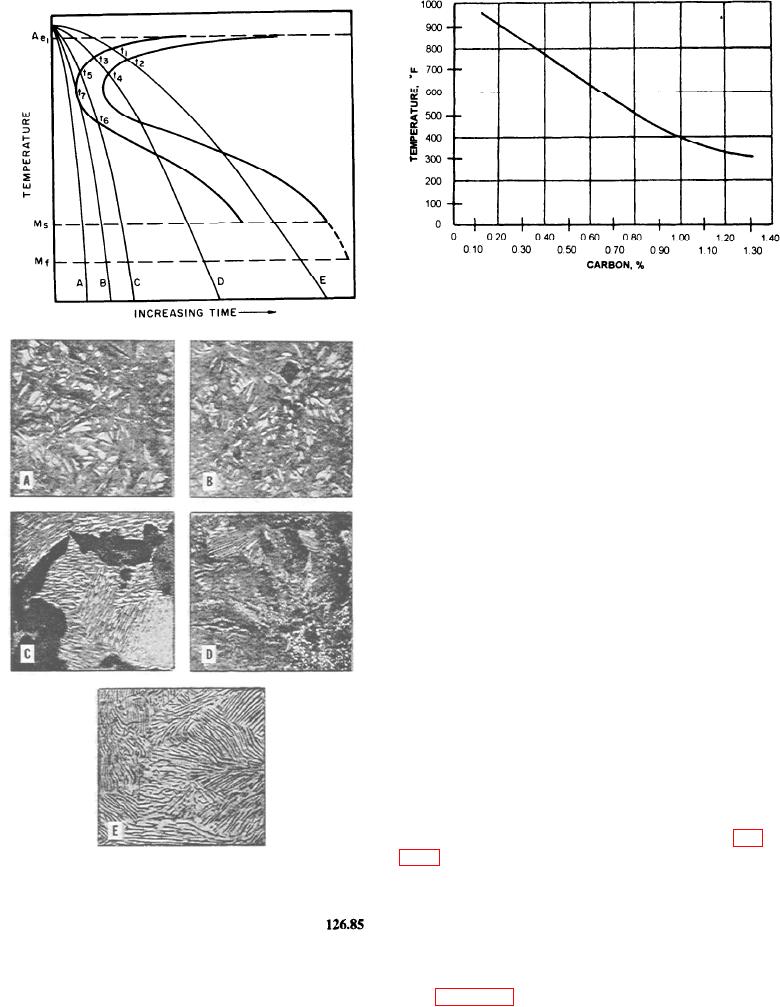
Figure 15-17.--Influence of carbon on the start of martensite
of critical importance. Somewhat slower rates of
cooling above and below this temperature range can be
tolerated and a completely hardened steel (one that is
completely martensite) can be obtained if the cooling
through the temperature interval at the nose of the
S-curve is sufficiently fast. In practice, however, steels
are usually cooled rapidly from the quenching
temperature to relatively low temperatures (20 to
250F) and then tempered immediately to prevent
Although the discussions of the decomposition of
austenite have been limited to a steel of eutectoid
composition, other steels behave in a similar manner, at
different temperatures and times of reaction. In
hypoeutectoid steels, free ferrite plus pearlite are
formed if transformation begins above the temperature
range at the nose of the S-curve. The amount of fre-
ferrite decreases as the temperature of transformating
approaches the nose of the curve. In hypereutec,
steels, free ferrite plus pearlite are formed if
transformation occurs above the nose. `The time for the
start of the transformation at the nose increases as the
carbon increases up to the eutectoid composition, and
then decreases with further increase in carbon. That is,
the nose is shifted to the right on the time axis (fig.
15-15) as the carbon is increased to 0.8 percent and back
to the left with further increases in carbon content.
The temperature of formation of bainite is not
appreciably affected by carbon content, but the time for
its formation increases with the carbon.
Figure 15-16.--Schematic diagram illustrating the relation
Both the Ms and the Mf temperatures are lowered
between the S-curve, continuous cooling curves, and
resulting microstructures of eutectoid carbon steels.
significantly by increasing carbon content, as shown for
M, in figure 15-17. The Mf temperatures of the plain-
carbon steels have not been adequately determined.
15-19