

Downcutting tool: You may grind and set this
tool (fig. 5-24, view B) for either right- or left-hand
operation and use it to make vertical cuts on edges, sides,
and ends. It is substantially the same as the roughing
tool, with the exception of its position in the toolholder.
Shovel-nose tool: You may use this tool (fig.
5-24, view C) for downcutting in either a right- or
left-hand direction. It requires a small amount of back
rake and the cutting edge should be the widest part of
the tool. Make the corners slightly rounded to give
them longer life.
Side tool: This tool (fig. 5-24, view D) comes
in both right- and left-hand versions required to finish
vertical cuts. You also may use these tools to cut or
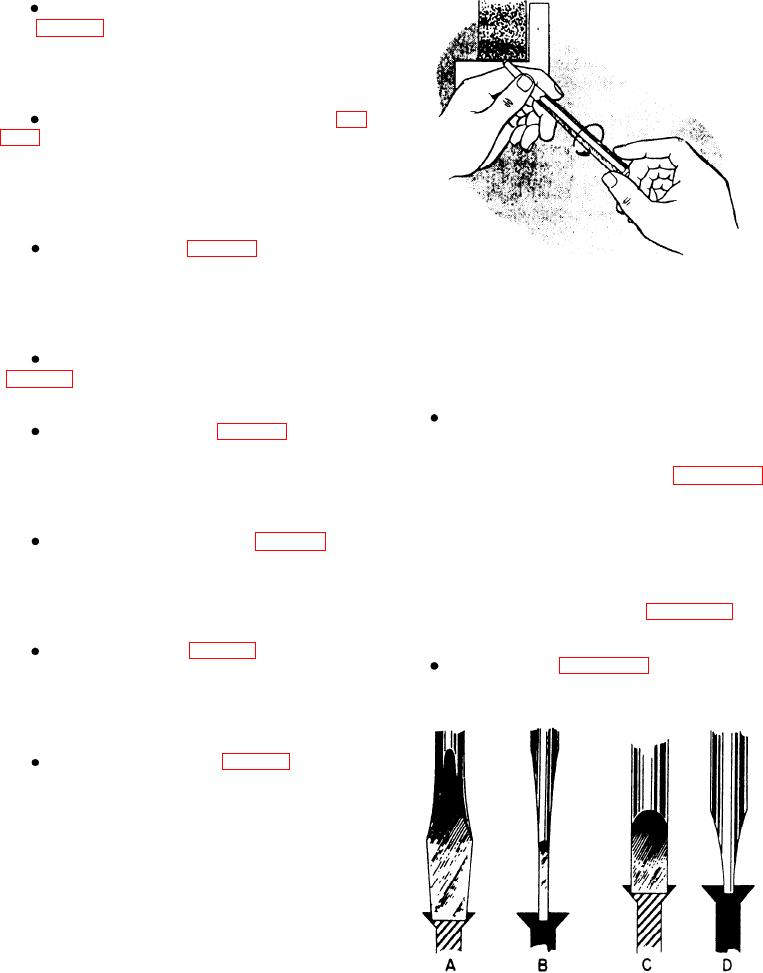
Figure 5-25.--Grinding a center punch with a bench grinder.
finish small horizontal shoulders to avoid changing
tools after you make a vertical cut.
screwdrivers, and other handtools on an abrasive
Cutting-off tool: You should give this tool
grinding wheel. We will explain the sharpening of
(fig. 5-24, view E) relief on both sides to allow free
these tools in the following paragraphs:
cutting action as the depth of cut is increased.
Center punches: To sharpen a center punch,
Squaring tool: This tool (fig. 5-24, view F) is
rest your hand on the tool rest of the grinder and
similar to a cutting-off tool and you can make it in any
cradle the end of the punch between the index finger
desired width. Use the squaring tool mostly to finish
and thumb of one hand, as shown in figure 5-25.
the bottoms and sides of shoulder cuts, keyways, and
Move the punch into light contact with the rotating
grooves.
grinder wheel, with the center line of the punch
forming about a 45 angle with the face of the wheel.
Angle cutting tool: This tool (fig. 5-24, view
This will give the approximate 90 included angle
G) is adapted for finishing operations and is generally
required for a center punch. With the thumb and
used following a roughing operation made with the
index finger of the other hand, rotate the punch as
downcutting tool. You may grind this tool for right-
shown by the directional arrow in figure 5-25. Dip
or left-hand operation.
the punch in coolant frequently during the process.
Shear tool: This tool (fig. 5-24, view H) is used
Screwdriver tips: Figure 5-26, views A and C,
to produce a high finish on steel and should be operated
are the front views of a properly dressed common
with a fine feed. Grind the cutting edge to form a radius
of 3 to 4 inches, twisted to a 20 to 30 angle, and give it
a back rake in the form of a small radius.
Gooseneck tool: This tool (fig. 5-24, view I) is
used to finish cast iron. You must forge it so the
cutting edge is behind the backside of the tool shank.
This feature allows the tool to spring away from the
work slightly, reducing the tendency to gouge or
chatter. Round off the cutting edge at the corners and
give it a small amount of back rake.
GRINDING HANDTOOLS
You should keep hand tools in the best usable
condition. To do that, you must sharpen cutting edges
frequently and true or shape certain other tools for
Figure 5-26.--Shapes of screwdrivers when properly dressed.
special purposes. Shape or sharpen chisels, punches,
5-19