

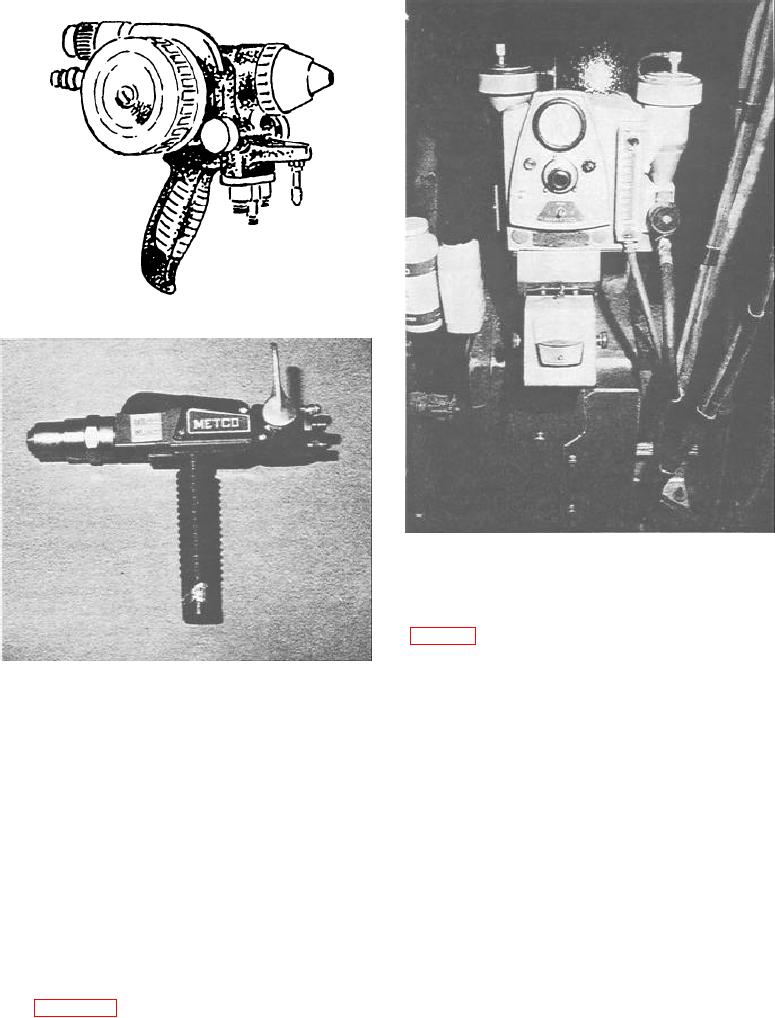
Figure 12-2.--Type 12E spray gun.
28.464
Figure 12-4.--Power feed unit.
(fig. 12-4). The powder is propelled through the flame
where it melts and is deposited on the work in the form
of a coating. This gun will spray metal, ceramic, cement,
28.463
and exothermic powders.
Figure 12-3.--Type 6P-II powder spray gun.
Exothermic coating composites are materials that
produce an exothermic (heat evolved) reaction from
their chemical creation. For example, when nickel and
a self-contained compressed air turbine. At the nozzle,
aluminum composites reach a certain temperature in the
the wire is continually melted in an oxygen-fuel gas
spray gun flame, they combine to produce nickel
flame. Then, a controlled stream of compressed air
aluminite and heat. The extra heat provided to the
blasts the molten tip of the wire, producing a fine metal
molten particles by the exothermic reaction, coupled
spray. Systems of this type are commonly used to spray
with the high particle velocity of the thermal spray
aluminum wire coatings for corrosion control on items
process, accounts for the self-bonding characteristics of
deck machinery, and equipment foundations.
the coating and its exceptional strength.
Exothermic materials are often called one-step
coatings. They produce self-bonding, one-step buildup
Powder-Oxygen-Fuel Spray
coatings that combine metallurgical bonding with good
wear resistance. They also eliminate the need for
Figure 12-3 shows a type 6P-II powder spray gun.
The powder is fed into the gun by a powder feed unit
separate bond and buildup coatings.
12-3